
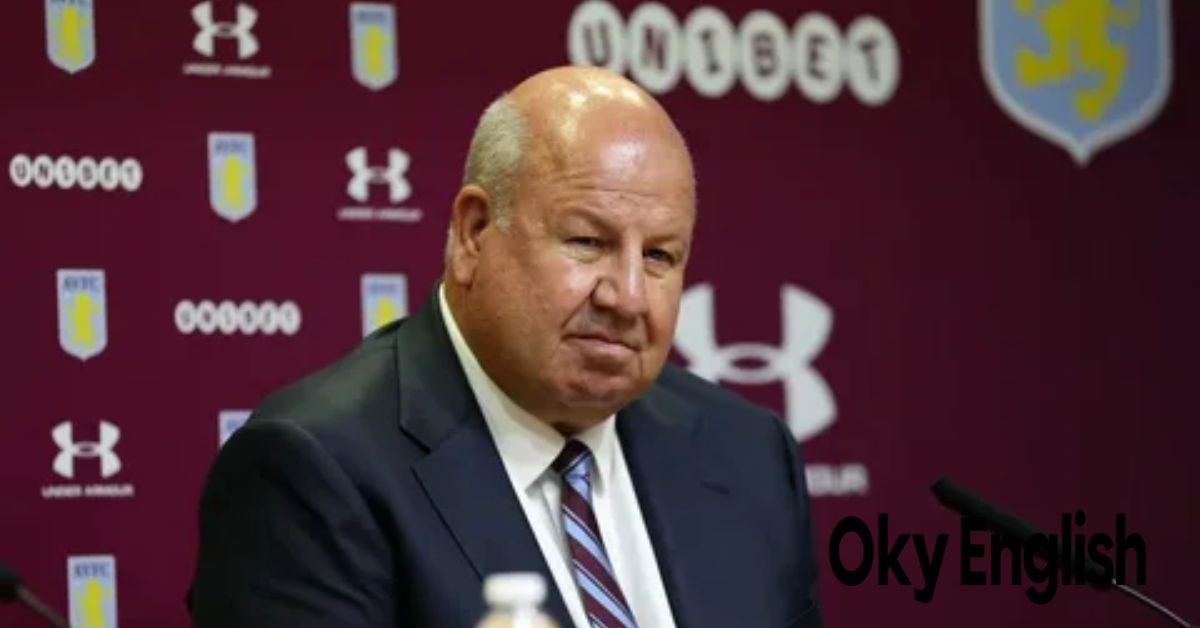
Keith Wyness is a seasoned Chief Executive Officer who shaped modern football administration through senior roles at Everton FC, Aston Villa FC, and Aberdeen FC. His career blends corporate discipline from his time as a British Airways executive with the high-pressure world of the Premier League and Scottish Premier League.
Known for his sharp focus on club operations, financial restructuring, and stadium development, Keith Wyness played a key role in discussions around the Everton Stadium project at Bramley-Moore Dock. Beyond boardrooms, he appears as a football commentator and Football Insider contributor, offering insight into modern football economics, ownership strategies, and long-term club sustainability across elite European football.
Keith Wyness Bio
| Fact | Details |
| Full Name | Keith Wyness |
| Known For | Football executive and Chief Executive Officer in Premier League and Scottish football |
| Career Start | Former British Airways executive before entering football administration |
| Aberdeen Role | Joined Aberdeen FC (2000) as CEO, focused on financial restructuring |
| Everton Role | Appointed CEO of Everton FC (2004) during modernization phase |
| Aston Villa Role | Executive leadership role at Aston Villa FC (2016) during ownership transition |
| Key Project | Early involvement in Everton Stadium planning at Bramley-Moore Dock |
| Industry Focus | Club operations, football governance, and commercial expansion |
| Media Work | Contributor to Football Insider and football commentary platforms |
| Podcast Appearance | Featured in Inside Track podcast discussions on football economics |
| Expertise Areas | Stadium development, financial fair play, and club sustainability |
| Estimated Net Worth | Not publicly confirmed; believed to reflect executive salaries and consultancy earnings |
| Reputation | Recognized football analyst and executive insider in UK football media |
Early Life and Career Beginnings
Keith Wyness built his early professional identity far away from football pitches. Before becoming a Football CEO, he worked as a British Airways executive, where he developed skills in logistics, operations, and commercial strategy. These skills later became essential when he transitioned into football administration, where financial discipline often decides whether clubs succeed or fail.
His move into sport management reflects a broader trend in football governance, where clubs increasingly hire executives from corporate industries rather than former players. Wyness’s early career shows how structured business thinking can reshape football clubs struggling with debt, outdated infrastructure, or weak sponsorship models.
By the time he entered football around Aberdeen 2000, he had already built a strong foundation in leadership and corporate operations. This background helped him understand club operations, budgeting, and long-term planning. Unlike traditional football managers focused on the pitch, Wyness focused on balance sheets, commercial deals, and structural efficiency.
A simple comparison helps explain his shift:
| Traditional Football Leadership | Corporate Executive Style (Wyness Model) |
| Focus on tactics and players | Focus on revenue and sustainability |
| Short-term match results | Long-term financial restructuring |
| Stadium as venue | Stadium as commercial asset |
This early foundation shaped everything that followed in his career, especially his later influence at Premier League level clubs.
Keith Wyness at Aberdeen FC
At Aberdeen FC, Wyness stepped into the role of Chief Executive Officer, entering the competitive environment of the Scottish Premier League. His mission centered on stabilizing finances while modernizing club operations. Aberdeen at the time needed stronger financial restructuring, improved commercial growth, and more efficient club operations.
Wyness focused heavily on sponsorship acquisition and internal efficiency. He worked to strengthen revenue streams beyond ticket sales, recognizing that matchday revenue alone could not sustain a modern football club. This approach reflected a growing awareness of football economics, where clubs must diversify income through media, partnerships, and branding.
One of his key contributions involved improving commercial discipline. He pushed for better financial controls and long-term planning strategies. These decisions helped position Aberdeen as a more structured organization, even within the financial limitations of Scottish football.
However, challenges remained. Competing with financially stronger clubs in the Scottish Premier League limited rapid transformation. Still, Wyness earned a reputation as a disciplined football executive insider who understood how to operate within tight budgets while still aiming for growth.
His time at Aberdeen became a stepping stone that led him into larger opportunities, especially in the English Premier League, where financial stakes were significantly higher.
Read More
Shehab Khan ITV Ethnicity: Inside His British Bangladeshi Background
The Everton Era: Modernizing a Premier League Giant
Wyness’s appointment at Everton FC marked a major shift in his career. As Chief Executive Officer, he entered one of the most historic clubs in the Premier League with strong tradition but growing commercial challenges.
At Everton, his focus turned toward modernization. He worked on expanding commercial expansion, improving global branding, and preparing the club for long-term financial sustainability. Everton needed to compete with financially dominant Premier League clubs, which required smarter revenue strategies and infrastructure planning.
A key focus was the early development discussions around what would eventually become the Everton Stadium project at Bramley-Moore Dock. Although multiple executives contributed over time, Wyness played a role in shaping early thinking around stadium modernization and revenue growth potential.
He also worked on internal restructuring, improving operational efficiency within Goodison Park systems. His approach emphasized that stadiums should not only host matches but also generate consistent income through events, hospitality, and partnerships.
His Everton period highlights the shift in modern football from sporting performance alone to financial strategy and infrastructure investment. It also shows how Premier League ownership increasingly relies on executive decision-making beyond the pitch.
Keith Wyness’s Net Worth: The Real Story Behind the Numbers
Discussions around Keith Wyness net worth often miss the broader context of how football executives earn income. Unlike players or managers, CEOs build wealth through salaries, consultancy roles, and media contributions rather than contracts or endorsements.
Wyness’s financial profile reflects decades of executive leadership across multiple clubs and industries. His income sources typically include:
| Income Source | Description |
| Club salaries | Earnings from roles at Everton, Aston Villa, Aberdeen |
| Consultancy | Advisory work in football consultancy and governance |
| Media work | Contributions to Football Insider and commentary platforms |
| Speaking roles | Football economics and governance analysis |
His reputation as an executive insider adds value to media platforms like Football Insider, where he contributes analysis through formats such as the Inside Track podcast. This media presence strengthens his visibility and indirectly supports his professional value.
Compared to top Premier League managers or players, his net worth remains modest. However, it reflects stability rather than celebrity-driven income. His financial trajectory aligns with corporate executives in sport rather than athletic stars.
The key misunderstanding around his wealth comes from assuming football executives earn player-level salaries. In reality, football administration rewards long-term leadership and strategic influence rather than short-term fame.
Read More
Hamish Badenoch: The Man Behind Kemi Badenoch
Everton Stadium Update: Wyness’s Expert Take on Bramley-Moore Dock
The Everton Stadium project at Bramley-Moore Dock represents one of the most ambitious stadium regeneration efforts in English football. Wyness has frequently commented on its progress, emphasizing both opportunity and risk.
He often highlights how modern stadiums drive matchday revenue, commercial partnerships, and long-term club sustainability. The shift from Goodison Park to a new waterfront stadium reflects a broader Premier League trend where infrastructure becomes a financial engine.
Wyness has pointed out that stadium development projects often face delays due to financing, construction complexity, and regulatory approvals. These issues are common in large-scale football infrastructure projects.
For comparison, USA stadium projects in the NFL follow similar economic logic, where venues are designed for multi-use revenue streams rather than single-purpose matches.
A simplified view of stadium impact:
| Factor | Old Model (Goodison Park) | New Model (Bramley-Moore Dock) |
| Revenue | Limited matchdays | Year-round commercial use |
| Facilities | Basic hospitality | Premium seating and events |
| Global appeal | Local focus | International branding |
Wyness’s analysis frames the stadium as a long-term financial asset rather than just a sporting venue.
A Broader View: Stadiums as Catalysts for Football’s Future
Modern football increasingly treats stadiums as economic ecosystems. Wyness often emphasizes that stadiums drive football economics more than almost any other asset.
The shift is clear. Clubs now use stadiums for concerts, corporate events, and international branding. This creates diversified income streams beyond traditional broadcasting rights and ticket sales.
USA sports infrastructure offers a useful comparison. NFL stadiums operate as entertainment hubs, not just sports venues. Premier League clubs are moving in the same direction.
Stadium regeneration projects like Everton’s demonstrate how infrastructure can reshape club valuation. A modern stadium improves sponsorship deals, increases tourism, and strengthens global identity.
Wyness’s perspective highlights a key truth: clubs that fail to modernize their stadiums risk falling behind financially, regardless of on-field performance.
Keith Wyness at Aston Villa: Lessons from a Modern Club
At Aston Villa FC, Wyness worked during a period of restructuring and ownership change. His role focused on stabilizing operations and improving financial performance in line with financial fair play regulations.
Villa’s challenges included balancing spending with revenue generation while adapting to evolving Premier League competition. Wyness contributed to refining club operations, ensuring financial discipline during transitional ownership phases.
This experience reinforced his understanding of how ownership structures influence football outcomes. He observed how Premier League ownership impacts everything from recruitment to stadium investment.
His time at Villa added another layer to his Keith Wyness biography, showing adaptability across different club environments and financial conditions.
Keith Wyness and Football Insider: From Boardroom to Broadcast
After his executive career, Wyness transitioned into media as a football commentator and analyst. His work with Football Insider and related platforms positioned him as a respected voice in football business discussions.
Through formats like the Inside Track podcast, he shares insights on transfers, club finances, and governance trends. His analysis stands out because it comes from real boardroom experience rather than external commentary.
This shift reflects a growing trend where former executives become media contributors, shaping public understanding of football strategy.
His commentary often focuses on football governance, transfer economics, and financial restructuring across Premier League clubs.
Keith Wyness’s Influence on Modern Football Commentary
Wyness has become a recognizable football analyst because he bridges the gap between corporate strategy and football culture. His insights help fans understand why clubs make financial decisions beyond the pitch.
Unlike traditional pundits, he speaks from experience inside football administration. This gives weight to his analysis on club sustainability and commercial expansion.
His influence extends across media platforms where football business is increasingly discussed in detail. He helps audiences connect financial decisions with sporting outcomes, especially in the Premier League.
Keith Wyness’s Legacy and Continuing Impact
Wyness’s legacy lies in his ability to merge corporate thinking with football strategy. Across Everton FC, Aston Villa FC, and Aberdeen FC, he influenced how clubs approach finance and infrastructure.
His work continues through media commentary, consultancy, and football analysis. The idea of stadiums as revenue engines and clubs as businesses reflects his long-term influence.
He remains a reference point in discussions about football economics, especially when evaluating stadium projects like Everton’s Bramley-Moore Dock development.
Conclusion: Keith Wyness Net Worth and the Everton Stadium Update in Perspective
The story of Keith Wyness net worth and the Everton Stadium update is not just about money or construction timelines. It reflects a broader shift in football where business strategy, stadium development, and media analysis now shape the game as much as on-field performance.
Wyness’s journey from corporate aviation to Premier League boardrooms shows how modern football depends on executive thinking. His influence across Everton FC, Aston Villa FC, and Aberdeen FC highlights the growing importance of football governance and infrastructure planning.
The Everton Stadium project at Bramley-Moore Dock symbolizes this transformation. It represents the future of football economics, where stadiums function as global revenue engines rather than simple match venues.
For USA readers familiar with franchise-based sports models, Wyness’s perspective offers a familiar logic: invest in infrastructure, expand revenue streams, and build long-term sustainability.

Mason Tyler is an American content writer specializing in celebrity news, lifestyle, and achievements, delivering well researched, original, and reliable articles for OkyEnglish with clear, reader focused expertise.