
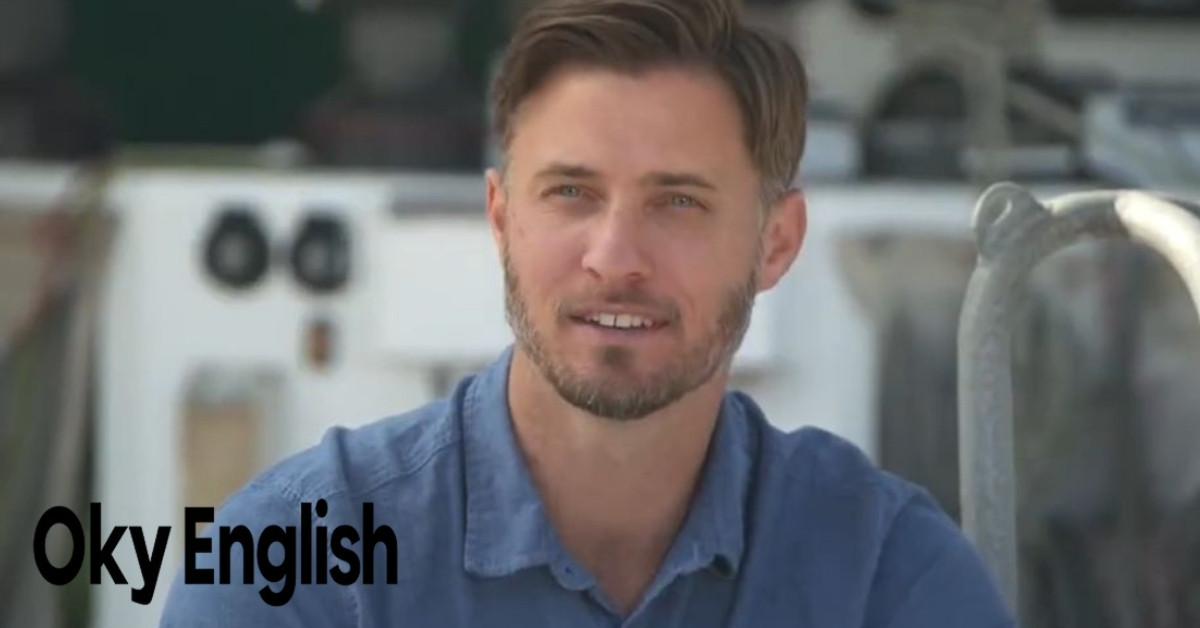
A modern climate entrepreneur reshapes how industry views carbon and material production through science and purpose-driven innovation. Mark Herrema stands at the center of this shift as co-founder of Newlight Technologies and creator behind AirCarbon systems that convert greenhouse gases into usable materials. His work connects microbial engineering with real-world manufacturing, turning methane emissions into carbon-negative materials that replace traditional plastics.
Based in Huntington Beach California, he leads advancements in carbon capture and regenerative industrial design that support a circular economy model. Through AirCarbon, he demonstrates how waste gas becomes feedstock for sustainable production. His approach blends entrepreneurship with environmental responsibility, pushing industries toward fossil-free systems that reduce harm while maintaining scalability and commercial value in global markets.
MARK HERREMA Bio
| Category | Key Fact |
| Full Name | Mark Herrema |
| Known For | Co-founder and CEO of Newlight Technologies |
| Core Innovation | AirCarbon carbon-negative material system |
| Industry | Climate tech and sustainable materials |
| Location | Huntington Beach, California, USA |
| Company Founded | Newlight Technologies (with Kenton Kimmel) |
| Core Technology | Microbial conversion of greenhouse gases into PHB polymer |
| Main Input Gas | Methane emissions captured from industrial sources |
| Output Material | Biodegradable carbon-negative plastic alternative |
| Environmental Impact | Converts greenhouse gases into usable materials instead of releasing them |
| Key Product Use | Packaging, consumer goods, sustainable material applications |
| Scientific Basis | Polyhydroxybutyrate (PHB) biopolymer production |
| Process Type | Biological fermentation using microorganisms |
| Industry Focus | Circular economy and regenerative manufacturing |
| Recognition | Featured in sustainability and climate innovation discussions globally |
| Mission Focus | Turning carbon emissions into valuable industrial resources |
MARK HERREMA: The Man Who Turns Air into Opportunity and the Rise of Climate Innovation
Mark Herrema built his reputation by challenging a basic assumption in modern industry: that pollution is unavoidable. As the CEO Newlight Technologies, he helped turn a scientific idea into a real commercial system that transforms methane and carbon emissions into usable products. His work with Kenton Kimmel, co-founder of Newlight Technologies, positioned him at the center of a new wave of green startup innovation in the United States.
The journey of Mark Herrema Newlight Technologies CEO began with a simple question: what if waste could become feedstock? That question led to breakthroughs in greenhouse gas capture and carbon sequestration through biological systems. Instead of relying on fossil fuels, the company uses naturally occurring processes to convert emissions into biological polymer structures.
This shift matters because it connects climate science with industrial production. In traditional systems, carbon emissions are treated as a byproduct. In Herrema’s model, carbon becomes the foundation. This idea fits directly into the expanding carbon economy and circular economy models being adopted across the USA.
For example, instead of producing plastic from petroleum, his system creates carbon-negative plastic alternatives that reduce environmental harm while maintaining performance. This approach reflects a deeper philosophy of sustainability innovation, where business growth aligns with ecological restoration rather than depletion.
AirCarbon: Reimagining the Carbon Economy
The core of Mark Herrema’s impact lies in AirCarbon, a breakthrough carbon-negative material developed through Newlight Technologies. AirCarbon is created when captured greenhouse gases, especially methane emissions, are converted into PHB polymer, a naturally occurring biomaterial produced by microorganisms.
Unlike conventional plastics, AirCarbon is marine biodegradable, meaning it breaks down safely in ocean environments without leaving toxic residue. This makes it a strong single-use plastics alternative and a potential replacement for petroleum-based packaging, textiles, and even sustainable leather alternative applications.
The process relies on microorganisms carbon conversion, where microbes consume greenhouse gases and produce PHB as a byproduct. These polymers are then processed in proprietary reactors that allow scalable industrial production while maintaining fossil-free production standards.
To understand its importance, consider the comparison below:
| Material Type | Source | Environmental Impact | End of Life |
| Traditional Plastic | Fossil fuels | High emissions | Long-term pollution |
| Bioplastic (general) | Corn or sugar | Moderate impact | Partial biodegradability |
| AirCarbon | Captured methane | Carbon-negative | Marine biodegradable |
This innovation places AirCarbon at the center of regenerative industry discussions in the USA. It also supports the transition from extraction-based systems to Extraction to regeneration models, where materials actively reduce atmospheric carbon instead of increasing it.
Leadership Philosophy: Purpose Before Profit
Mark Herrema’s leadership style reflects a deep commitment to purpose-driven startup culture. As a climate entrepreneur, he often emphasizes that financial success must follow environmental impact, not replace it. This mindset aligns with the philosophy of profit from balance, where business growth depends on ecological responsibility.
At Newlight Technologies, decision-making often begins with a simple question: does this choice reduce environmental harm? If not, it gets re-evaluated. This approach shapes hiring, partnerships, and long-term strategy. It also attracts engineers and scientists who want their work to have real-world meaning beyond revenue.
Herrema’s leadership reflects the mindset of an environmental humanist, someone who sees technology as a tool to improve human and ecological systems together. Rather than separating business and ethics, he merges them into one operational model.
This philosophy has helped Newlight Technologies grow in a competitive industry dominated by fossil-based materials. Investors and partners increasingly recognize that sustainable materials are not just ethical choices but long-term economic necessities.
In practice, this leadership style builds resilience. When challenges arise, such as scaling production or managing costs, the focus remains on mission alignment. That clarity prevents short-term pressure from overriding long-term vision, a common failure point in many green startup environments.
Scientific and Technological Impact
The scientific foundation of Mark Herrema carbon negative innovation lies in biotechnology and industrial microbiology. At its core, the system uses Polyhydroxybutyrate (PHB), a naturally occurring polymer produced by bacteria when they consume carbon-rich gases.
These processes take place in controlled proprietary reactors, where microorganisms are fed greenhouse gases instead of sugars or petroleum-based inputs. Through microorganisms carbon conversion, these bacteria produce PHB, which is then harvested and refined into usable biomaterial forms.
This method significantly reduces reliance on fossil fuels while actively removing emissions from the atmosphere. It is one of the few industrial systems that qualifies as truly carbon-negative plastic production.
Research collaborations have helped validate and improve the technology. Institutions such as Princeton University have contributed to advancing understanding of microbial efficiency and polymer stability. This academic partnership strengthens the credibility of sustainability innovation in industrial applications.
A simplified breakdown of the process looks like this:
| Stage | Description |
| Capture | Methane emissions collected |
| Conversion | Microorganisms consume gases |
| Production | PHB polymer formed |
| Refinement | Material processed into AirCarbon |
| Application | Used in products like packaging |
This system shows how greenhouse gas capture can move beyond theory into scalable industrial reality. It also highlights how science and entrepreneurship can merge to create solutions that address climate change directly.
Recognition and Global Influence
Mark Herrema’s work has gained attention across global sustainability platforms. As a recognized World Economic Forum pioneer, he has contributed to discussions on the future of carbon economy systems and industrial transformation. His innovations have also been highlighted by TIME Magazine, Forbes sustainability, and Fast Company, reflecting broad recognition across business and environmental media.
His influence extends beyond media coverage. At events and forums, he regularly speaks about the transition from fossil-based production to regenerative industry models. These conversations often focus on scaling carbon sequestration technologies into mainstream manufacturing.
His connection to academic and business institutions, including Princeton University, strengthens his credibility in both scientific and entrepreneurial spaces. This dual recognition is rare and places him among a small group of innovators shaping global material science.
In the USA, his work has become part of broader discussions on industrial reform. Policymakers and corporations increasingly explore sustainable entrepreneurship models inspired by companies like Newlight Technologies.
Mark Herrema in 2026: Continuing the Mission
In 2026, Mark Herrema sustainability entrepreneur 2025 continues expanding the reach of AirCarbon applications across industries. As demand for low-impact materials grows, Newlight Technologies focuses on scaling production and improving efficiency.
The company now explores broader uses of AirCarbon, including fashion, packaging, and industrial goods. Each expansion reinforces the idea that carbon can become a valuable input rather than a waste product.
Strategically, Herrema continues to position Newlight as a leader in fossil-free production. The long-term goal is to integrate AirCarbon into global supply chains, making it a standard material in sustainable materials markets.
This phase reflects a shift from innovation to adoption. The challenge is no longer scientific proof but industrial scaling. That transition defines the next chapter of his mission.
Personality, Family, and Private Life
Mark Herrema maintains a relatively private personal life, even as his professional influence grows. Known for a calm and analytical approach, he often focuses more on systems than spotlight. Those who work with him describe a grounded personality shaped by curiosity and discipline.
Living in Huntington Beach California, he balances the intensity of climate entrepreneurship with personal space away from public attention. His values reflect consistency, patience, and long-term thinking rather than rapid visibility.
While details about his family remain private, his work suggests a strong alignment between personal values and professional mission. His commitment to regenerative industry often reflects a deeper belief in improving future conditions for communities and ecosystems.
Challenges and Criticism
Like many innovators in sustainable entrepreneurship, Mark Herrema faces real challenges. Scaling carbon-negative material production requires significant infrastructure investment and operational precision. Competing with low-cost fossil-based plastics remains a major hurdle.
Critics also question scalability and lifecycle transparency of biodegradable material systems. Some argue that industrial adoption of PHB polymer still depends on cost reductions and supply chain expansion.
However, these challenges have driven improvements. Newlight Technologies continues refining its carbon capture efficiency and production systems to meet industrial demand. The tension between innovation and scalability remains central to the industry’s evolution.
Philosophy: Turning Ethics into Enterprise
At the heart of Mark Herrema’s work lies a simple idea: ethics can function as an operating system for business. Instead of separating profit and responsibility, his model integrates them into one framework of sustainability innovation.
This philosophy supports the shift from extraction-based industries to Extraction to regeneration systems. In this model, economic activity restores environmental balance rather than disrupting it.
It challenges traditional assumptions about industrial growth. Instead of choosing between profit and planet, his approach shows how both can align through design, science, and intention.
The Future Vision
The long-term vision for AirCarbon involves global adoption across multiple industries. As demand for sustainable materials rises, AirCarbon could become a foundational input in manufacturing systems worldwide.
Future expansion includes deeper integration into packaging, textiles, and industrial components. The goal is to replace petroleum-based inputs with carbon-negative plastic alternatives that actively reduce atmospheric emissions.
This vision aligns with global climate goals and reflects a broader shift toward carbon economy transformation.
Legacy and Inspiration
Mark Herrema’s legacy lies in redefining what industry can do with carbon. Instead of treating emissions as waste, he shows how they can become raw material for a new economic system.
As a co-founder Newlight Technologies, his influence extends into science, business, and environmental policy. His work inspires a new generation of innovators focused on regenerative industry and climate entrepreneurship.
The impact of Mark Herrema AirCarbon innovation continues to grow as industries search for viable alternatives to fossil-based systems. His story reflects a broader transformation in how humanity approaches production, responsibility, and environmental balance.
Conclusion
The journey of MARK HERREMA: The Man Who Turns Air into Opportunity reflects a rare combination of science, leadership, and long-term vision. Through Newlight Technologies and AirCarbon, he demonstrates how carbon capture, microbial science, and industrial innovation can reshape global manufacturing.
His work stands at the intersection of sustainability innovation and real-world scalability. While challenges remain, the direction is clear. Industry is slowly moving from extraction to regeneration, and his contributions continue to push that shift forward in meaningful ways.

Mason Tyler is an American content writer specializing in celebrity news, lifestyle, and achievements, delivering well researched, original, and reliable articles for OkyEnglish with clear, reader focused expertise.